
BIS Certification for Toys & Electric Toys
Complete guide to BIS certification for toys in India — covering traditional toys, electric toys, battery-operated toys, and infant toys. Expert consulting from Standphill India.
- 5 toy categories & Indian Standards covered
- Comprehensive toy safety testing & verification
- Full factory audit preparation & ISI Mark licence
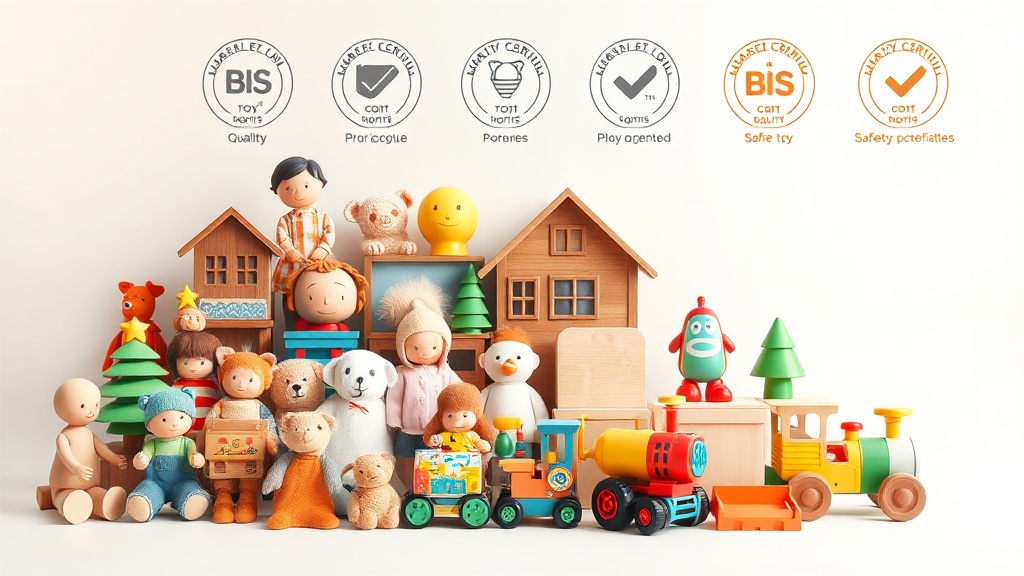
What is BIS Certification for Toys?
BIS Certification for Toys is a mandatory quality assurance programme under the Bureau of Indian Standards (BIS) that ensures toys manufactured, imported, or sold in India meet strict safety standards to protect children from hazards including flammability, mechanical injury, electrical shock, toxicity, and choking risks.
India's toy market — valued at over USD 2 billion — is growing rapidly with increasing demand from parents seeking safe, quality toys for their children. Several toy categories fall under mandatory ISI Mark certification through Quality Control Orders (QCOs) issued by the Government of India, including general toys (IS 9873), electric toys (IS 8864), and infant toys (IS 9873 Part 2).
Manufacturers cannot legally produce, import, or sell toys falling under mandatory standards without valid BIS certification. The certification process involves comprehensive laboratory testing, factory inspection, and quality documentation to ensure all toys meet child safety standards.
For detailed information on toy certification standards, testing requirements, and the complete certification process, visit Standphill India's comprehensive toy certification guide.
Types of Toys & Applicable Indian Standards
Each toy category has specific Indian Standards with unique testing and safety requirements. Here are the 5 major categories covered under BIS certification for toys.
General Toys (Non-Electric)
IS 9873 covers general toys including wooden toys, plastic toys, dolls, action figures, building blocks, and other non-electric toys. The standard specifies safety requirements for materials, design, construction, labeling, and packaging to protect children from hazards.
Applications
- Wooden toys and puzzles
- Plastic dolls and figurines
- Building blocks and construction sets
- Board games and card games
- Art and craft supplies for children
Key Safety Tests
- Flammability testing (fabric/materials)
- Small parts hazard test
- Mechanical hazard evaluation
- Surface finish & paint safety
- Choking hazard assessment
- Sharp edges & points check
- Material composition analysis
Electric Toys & Battery-Operated Toys
IS 8864 covers electric toys and battery-operated toys including electronic games, motorized vehicles, robotic toys, and light-up toys. The standard specifies electrical safety, mechanical safety, and protection requirements to prevent electric shock and other hazards.
Applications
- Battery-operated cars and motorcycles
- Electric trains and tracks
- Robotic toys and drones
- Electronic games and consoles
- Light-up and musical toys
- Video game controllers
- Electronic learning toys
Key Safety Tests
- Electrical safety testing (leakage current)
- Battery & power supply safety
- Mechanical strength under stress
- Thermal hazard testing
- Labeling & instruction verification
- Electromagnetic interference (EMI)
- Fire hazard assessment
- Ingestion hazard evaluation
Childrens Footwear & Toy Footwear
IS 1527 covers children's footwear including toy-related footwear and costume accessories. This standard ensures that footwear worn by children or used as part of toy costumes meets safety and comfort requirements.
Applications
- Children's shoes and sandals
- Toy character costume footwear
- Play shoes for children
- Dance shoes for kids
- Sport-specific children's footwear
Key Safety Tests
- Sole adhesion testing
- Heel strength verification
- Stitching durability test
- Material composition check
- Dimensional accuracy
- Flexibility & bend resistance
- Color fastness testing
Infant & Toddler Toys (0-3 Years)
IS 9873 Part 2 specifically addresses toys for infants and toddlers (ages 0-3 years), with stricter safety requirements for soft toys, rattles, teethers, and toys likely to be put in mouth. Enhanced requirements for non-toxic materials and absence of small detachable parts.
Applications
- Soft plush toys for infants
- Baby rattles & teethers
- Baby gyms and play mats
- Crib toys and mobiles
- Bath toys for toddlers
- Pacifiers and teething rings
Key Safety Tests
- Toxic substance testing (lead, cadmium, phthalates)
- Small parts detection (choking hazard)
- Saliva fastness for soft toys
- Sterility testing for teethers
- Flammability of fabrics
- Mechanical durability
- Surface finish safety
Electrical Safety for Child-Accessible Toys
IS 6313 covers electrical safety for child-accessible electric toys and devices. This standard ensures protection from electric shock, thermal hazards, and other electrical dangers for toys accessible to children.
Applications
- Electrically-operated toy trains
- Remote-controlled vehicles
- Electric toy guns & action devices
- Powered toy cookers & appliances
- Musical instrument toys
- Electric toy building sets
Key Safety Tests
- Electrical leakage testing
- Earthing/grounding verification
- Insulation resistance measurement
- Over-current protection testing
- Temperature rise evaluation
- Dielectric strength testing
- Power supply isolation
Toy BIS Certification Process
The BIS certification for toys follows the ISI Mark Product Certification Scheme. Here is the complete process:
Product Category & Standard Identification
Identify the toy type and applicable Indian Standard. Determine if your toy is electric/battery-operated (IS 8864), general toy (IS 9873), infant toy (IS 9873 Part 2), footwear-related (IS 1527), or electrically accessible (IS 6313).
Lab Testing & Certification
Submit toy samples to BIS-recognized testing laboratories for comprehensive safety testing. Tests vary by toy type but include flammability, mechanical safety, electrical safety, small parts hazards, toxicity, and durability verification.
Test Reports & Technical Documentation
Compile detailed test reports from BIS-recognized labs, complete product specifications, manufacturing process details, raw material sourcing information, and safety data sheets for all materials used.
MANAK Portal Application Filing
Submit the ISI Mark certification application through the BIS MANAK online portal with all test reports, technical documentation, manufacturing facility details, and quality control procedures.
Factory Inspection & Audit
BIS officials conduct thorough factory inspection to verify manufacturing processes, quality control systems, testing equipment, material sourcing, in-process inspections, and compliance with safety standards.
ISI Mark Licence Grant & Production
Upon approval, BIS grants ISI Mark licence for your toy products. You can now mark toys with the ISI Mark logo and sell them in India with regulatory compliance certification.
Documents Required for Toy BIS Certification
Complete and accurate documentation is essential for smooth toy certification. Standphill India ensures all your documents are properly prepared, verified, and audit-ready for BIS inspection.
Get documentation support- BIS application form (Form IV) duly completed
- Company registration certificate / partnership deed
- GST registration certificate
- Detailed factory layout plan with machinery locations
- Manufacturing process flowchart for toy production
- Raw material specifications and sourcing details
- Raw material safety data sheets (SDS)
- Quality control plan and testing procedures
- Product test reports from BIS-recognized laboratory
- Test reports for electrical safety (if applicable)
- Toy design drawings and product photographs
- Flammability test reports for fabrics/soft materials
- Toxicity test reports (lead, cadmium, phthalates)
- Mechanical strength and durability test reports
- List of testing equipment with calibration certificates
- In-process quality check documentation
- Previous BIS licence (if renewal)
Benefits of BIS Certification for Toys
BIS certification is both a legal requirement and a significant competitive advantage for toy manufacturers in India's rapidly growing toy industry.
Child Safety Assurance
BIS certification ensures toys are safe for children, meeting strict standards for flammability, mechanical hazards, toxicity, electrical safety, and small parts. Parents trust ISI-marked toys for their children's safety.
Mandatory Regulatory Compliance
Certain toy categories fall under mandatory Quality Control Orders. ISI Mark certification is legally required to manufacture, import, and sell toys in India. Non-compliance results in penalties and legal liability.
Consumer Trust & Market Credibility
The ISI Mark is the most recognized quality symbol in India. Parents, educators, and retailers actively seek ISI-certified toys. Certification significantly boosts market confidence and brand reputation.
Institutional & Government Orders
Schools, government childcare centers, ICDS programs, and educational institutions mandate ISI-certified toys. Certification opens access to large institutional procurement opportunities.
Expanded Distribution Channels
Major retail chains, toy stores, and e-commerce platforms prefer ISI-certified toys. Certification enables wider distribution and preferred shelf placement at leading retailers.
Reduced Liability & Insurance Costs
ISI certification reduces product liability risks and insurance costs. Certified toys have documented safety compliance, protecting manufacturers from warranty claims and legal disputes.
Export Market Access
ISI certification enhances credibility for international export. Many countries recognize Indian Standards, and certification helps toy manufacturers enter export markets.
Competitive Market Advantage
In a competitive toy market, BIS-certified products command premium pricing, better retailer relationships, and consumer preference over non-certified alternatives.
Toy BIS Certification at a Glance
Certification Timeline
Application to ISI Mark grant
Licence Validity
Annual renewal required
Toy Categories
IS 9873, IS 8864, IS 6313
Safety Verification
Comprehensive toy safety
Toy BIS Certification FAQs
Answers to the most common questions about BIS certification for toys in India.
Is BIS certification mandatory for all toys sold in India?
What Indian Standards apply to toys?
What tests are required for non-electric toys?
What additional tests do electric toys require?
Are infant toys subject to stricter standards?
How long does BIS certification for toys take?
Can imported toys be sold in India without BIS certification?
What is the cost of BIS certification for toys?
Why Choose Standphill India for Toy BIS Certification?
With over 12 years of experience and deep expertise in toy safety certification, Standphill India is your ideal partner for navigating BIS certification for toys.
Toy Industry Expertise
We have extensive experience in BIS certification for toys — both traditional and electric toys. Our team understands the specific safety requirements and testing protocols for different toy categories.
Lab Testing Coordination
We coordinate with BIS-recognized testing labs specializing in toy safety. We ensure proper sample preparation, correct test protocols, toxicity testing, electrical safety verification, and timely report generation.
Comprehensive Safety Documentation
We prepare complete safety documentation including flammability certificates, toxicity test reports, mechanical strength verification, electrical safety certificates, and all required compliance documentation.
Factory Audit Preparation
We conduct pre-audit assessments and prepare your manufacturing facility for BIS inspection — raw material traceability, in-process quality checks, final product testing, equipment calibration, and complete documentation.
MANAK Portal Management
We handle the entire MANAK portal process including account setup, application filing, document uploads, query resolution, and certificate download management.
Multi-Standard Coverage
If you manufacture different toy types, we manage parallel BIS applications across relevant standards — IS 9873, IS 8864, IS 6313 — with coordinated timelines and streamlined processes.
Post-Certification Support
Annual licence renewals, surveillance audit preparation, new product additions, toy design modifications, and ongoing regulatory compliance updates — we provide complete post-certification support.
Toy Safety Consulting
We provide guidance on toy design modifications for compliance, material selection for safety standards, and process improvements to minimize testing delays and rejections.
500+
BIS Registrations
95%
First-Time Approval
12+
Years Experience
50+
Industries Served
Ready to Get Your Toys BIS Certified?
Whether you manufacture traditional toys, electric toys, battery-operated toys, or infant toys, Standphill India provides end-to-end BIS certification consulting to help you achieve ISI Mark certification quickly and efficiently.