
BIS Certification Process & Required Documents — Complete Guide
Comprehensive guide to the BIS certification process in India, including step-by-step procedure, required documents, timelines, costs, and expert consulting from Standphill India.
- 6-step certification process explained
- Complete documents checklist by category
- Timelines & costs for all schemes
BIS Certification Schemes
BIS operates three main certification schemes. The applicable scheme depends on your product type, origin of manufacture, and regulatory requirements.
ISI Mark (Product Certification Scheme)
For domestic manufacturers and authorized importers. Involves factory inspection, product testing, and annual renewal.
CRS (Compulsory Registration Scheme)
For electronic and IT products. Self-declaration-based with lab testing but no factory inspection.
FMCS (Foreign Manufacturers Certification Scheme)
For foreign manufacturers. Requires appointing an Authorized Indian Representative and overseas factory inspection.
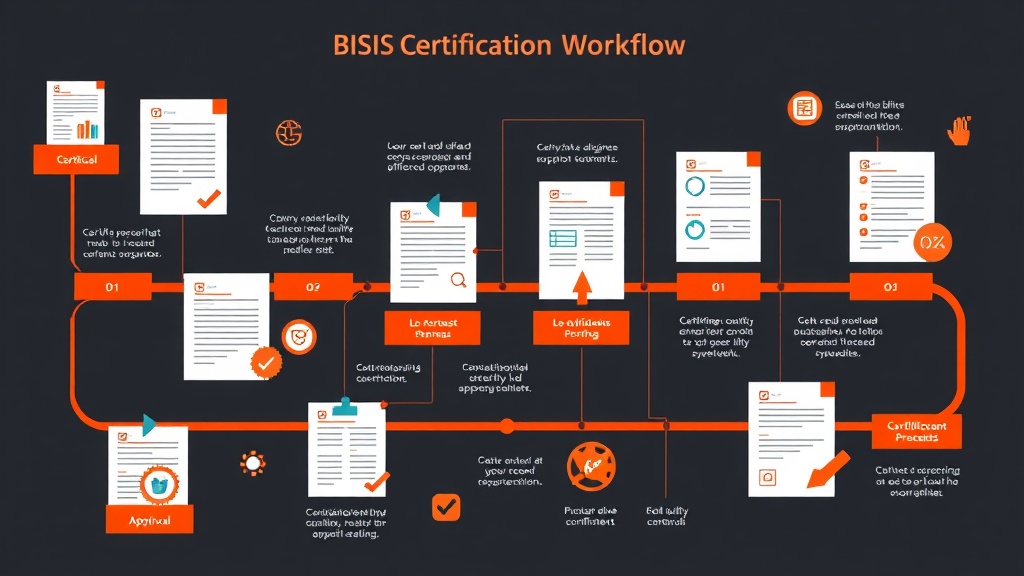
Complete BIS Certification Process
Follow these 6 steps to successfully obtain BIS certification for your product in India.
Product & Standard Identification
Identify the exact product type and applicable Indian Standard (IS). Consult the BIS Quality Control Orders to confirm if certification is mandatory for your product.
Lab Testing
Submit samples to a BIS-recognized laboratory for testing. Tests verify conformity with the applicable Indian Standard. Lab testing takes 2-4 weeks depending on product complexity.
Application Filing
Submit the BIS application through the MANAK online portal with test reports, product specifications, manufacturing details, and required documents.
Factory Inspection (ISI Mark Only)
BIS conducts factory inspection to verify quality control systems, raw materials, testing equipment, and production processes. Not required for CRS schemes.
Certificate Grant
Upon successful testing and inspection (where applicable), BIS grants the ISI Mark licence or registration certificate with a unique registration number.
Surveillance & Renewal
BIS conducts periodic surveillance audits and market sampling. Licence must be renewed annually or at specified intervals.
Documents Required for BIS Certification
Proper documentation is crucial for a successful BIS certification application. Here is a comprehensive checklist organized by category.
Company Documents
- Incorporation certificate (Ltd./Partnership/Proprietorship)
- GST registration
- PAN card
- Import Export Code (IEC) — for importers
- Authorized signatory ID proof
Product Documents
- Technical specifications and drawings
- Product photographs and labels
- Bill of materials
- List of raw material suppliers
- Applicable standards (IS) number and copy
Testing Documents
- Test reports from BIS-recognized laboratory
- Accreditation certificate of the testing lab
- Raw material test certificates
- Product label showing manufacturer details
Manufacturing Documents
- Factory layout plan
- Manufacturing process flowchart
- Quality control plan
- List of testing equipment with calibration records
- Previous BIS licence (for renewal)
Pro Tip
Prepare all documents in advance and have them verified before application. Incomplete or inaccurate documentation is the most common cause of application delays. Standphill India helps ensure your documentation is complete and BIS-ready.
BIS Certification Timelines
CRS (Electronics)
4-8 weeksFaster process, no factory inspection required
ISI Mark
3-6 monthsIncludes factory inspection, testing, and approval
FMCS
4-8 monthsOverseas factory inspection adds time
Cost Breakdown
BIS Application Fee
INR 1,000-2,000Varies by scheme
Lab Testing
INR 20K-2L+Depends on product type and number of tests
Marking Fee
Based on productionPer unit or annual marking fee
Licence Renewal
INR 500-2,000Annual or periodic renewal fee
Note: Exact costs vary by product category, complexity, and number of tests required. Contact Standphill India for a customized cost estimate.
Benefits of BIS Certification
Market Access
BIS certification is mandatory for many product categories. Without it, you cannot legally sell certain products in India.
Consumer Trust
The ISI Mark is recognized by consumers as a symbol of quality and safety, increasing product credibility and market demand.
Government Procurement
Government departments and PSUs often mandate BIS certification in their procurement tenders, opening access to institutional orders.
Quality Improvement
The certification process ensures your manufacturing processes meet international-level quality standards.
Legal Protection
Certification protects you from penalties, product seizures, and legal action under the BIS Act 2016.
Export Credibility
BIS certification enhances your product credibility in international markets, especially in South Asia and Africa.
Frequently Asked Questions
What is BIS certification?
Is BIS certification mandatory for all products?
How long does the BIS certification process take?
What is the role of the MANAK portal?
Do I need factory inspection for all BIS schemes?
Can foreign manufacturers get BIS certification?
What happens if I sell non-certified products when certification is mandatory?
How do I know which Indian Standard applies to my product?
Ready to Start Your BIS Certification?
Standphill India provides end-to-end BIS certification consulting — from product assessment and documentation preparation to lab coordination, MANAK portal management, and post-certification compliance. Let us guide you through the process.
Explore Product-Specific Certifications