
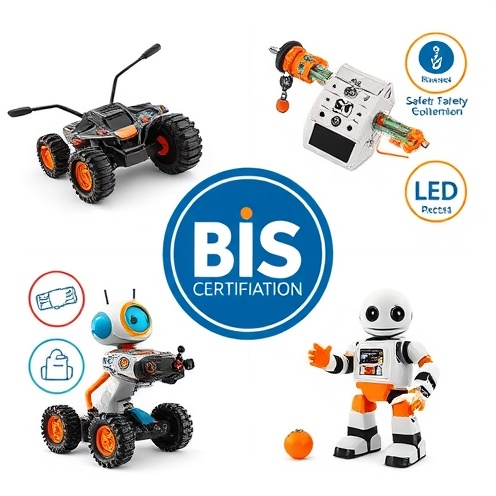
What Are Electric Toys and Why Do They Need Special Testing?
Electric toys are battery-operated or powered devices designed for children's play, including remote control vehicles, robotic toys, electronic games, LED toys, and motorized devices. These toys require stringent BIS certification for electric toys to ensure electrical safety alongside standard toy safety requirements from IS 9873.
Unlike non-electric toys, electric toys must pass additional electrical safety testing under IS 62079 to protect children from electrical hazards, short circuits, battery leakage, and overheating. This comprehensive guide covers all aspects of BIS certification for electric toys.
Types of Electric Toys Requiring BIS Certification
Remote Control Toys
RC cars, helicopters, boats, drones designed for children
Robotic Toys
Interactive robots, programmable bots, robotic pets
Electronic Gaming Toys
Electronic puzzle games, LCD games, handheld consoles
LED & Light-Up Toys
Toys with LED lights, glow sticks, light-up clothing
Musical Electronic Toys
Electronic keyboards, sound boxes, singing toys, musical instruments
Motorized Toys
Electric trains, motorized vehicles, moving figurines, motorized scooters
Interactive Electronic Toys
Talking dolls, electronic baby pets, interactive books
Electric Ride-On Toys
Battery-powered cars, motorcycles, scooters for children
Electrical Safety Standards for Electric Toys
IS 62079: Electric Toy Safety Standard
IS 62079 is the primary electrical safety standard for toys with electrical or battery-operated components. It establishes requirements for voltage, current, temperature, insulation, and protection against electrical hazards.
-
Voltage Limitation
AC supply toys limited to 24V AC or 28V DC maximum for child safety
-
Current Limitation
Current limitations prevent electrical shock hazards
-
Temperature Safety
Toys must not exceed safe surface temperatures during operation
-
Insulation Requirements
Proper insulation of electrical components to prevent contact hazards
Battery Safety Requirements for Electric Toys
Battery safety is critical for electric toys. All batteries and battery-powered toys must meet IS 9873 and IS 62079 requirements including:
Battery Type & Voltage
Only approved battery types (alkaline, rechargeable, coin cells) and voltage limits permitted
Battery Compartment Safety
Battery compartments must require a tool or deliberate effort to open—preventing child access
Leakage & Corrosion Protection
Design must prevent battery leakage from damaging toy or causing chemical burns
Polarity Protection
Toys must prevent damage or hazards from battery insertion in wrong polarity
Over-discharge Protection
Battery design must prevent batteries from becoming a hazard if over-discharged
Circuit Protection
Short circuit protection and overload protection to prevent overheating and fire hazards
Rechargeable Battery Safety
Rechargeable batteries must have charge control and temperature monitoring
Labeling & Documentation
Clear battery specifications, charging instructions, and safety warnings required on packaging
Electrical Testing Parameters for Electric Toys
High Voltage Testing
- • Dielectric strength testing to verify insulation integrity
- • Insulation resistance measurement
- • Leakage current verification under load conditions
Temperature & Thermal Testing
- • Surface temperature measurement during operation
- • Thermal stability testing under fault conditions
- • Heat cycle testing to ensure long-term safety
Battery & Circuit Testing
- • Battery compatibility and installation testing
- • Short circuit protection verification
- • Overload protection testing
- • Battery reversal polarity testing
Combined Mechanical & Electrical Testing
Electric toys must pass BOTH mechanical safety tests (IS 9873) AND electrical safety tests (IS 62079). Testing includes:
Mechanical Testing (IS 9873)
- • Small parts hazard testing
- • Sharp edges and points testing
- • Durability and impact testing
- • Fastener strength testing
Electrical Testing (IS 62079)
- • Voltage and current testing
- • Insulation resistance
- • Temperature rise testing
- • Electrical fault testing
Chemical & Flammability Testing
- • Heavy metal content verification in paints and materials
- • Toxic substance testing (cadmium, lead, phthalates)
- • Flammability classification and testing
Common BIS Certification Failures for Electric Toys
❌ Frequent Failure Points
- • Battery compartments not child-resistant enough
- • Insulation thickness below specifications
- • Temperature rise exceeding safe limits during operation
- • Inadequate short circuit protection
- • Battery leakage testing failures
- • Missing or incorrect polarity protection
✅ Success Prevention Measures
- • Design battery compartments with tool-required access
- • Use quality materials with adequate insulation thickness
- • Conduct thermal simulations before production
- • Implement robust circuit protection mechanisms
- • Use approved battery types only
- • Integrate automatic safety shutdowns
BIS Certification Timeline for Electric Toys
Design & Pre-Assessment
2-4 weeksReview design against IS 9873 & IS 62079; identify compliance gaps
Sample Preparation
1-2 weeksPrepare 5-10 samples for testing; packaging documentation
Laboratory Testing
6-10 weeksMechanical, electrical, chemical, and thermal testing; iterative if failures
Documentation Prep
2-3 weeksCompile technical docs, test reports, QCP, factory layout
BIS Application
1 weekFile complete application with all supporting documents
Factory Inspection
2-4 weeksBIS inspector verifies manufacturing QMS and capability
Certificate Issuance
Upon approvalISI Mark certificate valid for 3 years issued
Total Timeline: 14-28 weeks (depending on design complexity and testing results)
Critical Documents for Electric Toy Certification
Electrical Design Documentation
- • Circuit diagram with component specifications
- • Schematic showing voltage, current, and protection mechanisms
- • Battery specifications and compatibility matrix
- • Electrical safety analysis and hazard assessment
Testing & Compliance Reports
- • Complete IS 9873 mechanical safety test reports
- • IS 62079 electrical safety test reports
- • Thermal testing and temperature verification reports
- • Chemical composition and heavy metal test reports
FAQ: Electric Toy Certification
What is the maximum voltage allowed for electric toys in India?
IS 62079 limits AC supply toys to 24V AC maximum and 28V DC maximum. Toys with batteries must use approved battery types (typically AA, AAA, coin cells, or rechargeable packs within limits).
Must battery compartments be child-resistant?
Yes, IS 9873 requires battery compartments to be difficult for children to open. They must require a tool, simultaneous action, or significant force—preventing accidental opening.
What happens if my electric toy exceeds temperature limits?
If surface temperature exceeds safe limits (typically 43°C for toys in contact with skin), the toy fails testing. You must modify the circuit design, add heat dissipation, or reduce power consumption.
Are rechargeable toys more difficult to certify?
Rechargeable toys require additional testing including charge control, temperature monitoring, and overcharge protection. This adds complexity but is not prohibitively difficult with proper design.
Can I use any battery type in my electric toy?
No, only specific battery types approved under IS 9873 are permitted. Alkaline, zinc-carbon, rechargeable NiMH/Li-ion within voltage limits, and coin cells for specific applications are allowed.
What is the difference between electric toy certification and CRS for electronics?
Toy certification focuses on child safety using IS 9873 and IS 62079. CRS (BIS Compulsory Registration) is for electronic devices for general consumers. Toys in India use toy safety standards, not CRS.
Why Choose Standphill India for Electric Toy Certification?
Electric toy certification is complex, requiring expertise in both mechanical safety (IS 9873) and electrical safety (IS 62079). Standphill India has certified 150+ electric toy products with a 92% first-time approval rate.
- Electrical Engineering Expertise: Our team understands circuit design, battery safety, and thermal management
- Design Optimization Support: We identify compliance gaps early and recommend design modifications
- Lab Network: Partnerships with leading BIS-accredited labs for timely testing
- Complete Documentation: We handle all technical documentation and factory inspection preparation
Certify Your Electric Toys Today
Expert guidance for hassle-free BIS certification of electric toys. Get your products to market faster.
Start Electric Toy Certification