
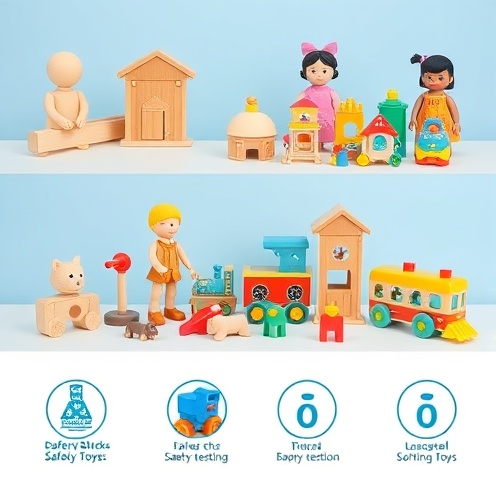
What Are Non-Electric Toys and Why BIS Certification Matters
Non-electric toys are traditional toys without batteries or electrical components, including wooden toys, plastic dolls, building blocks, stuffed animals, toy vehicles, games, and mechanical toys. While they don't have electrical hazards, BIS certification for non-electric toys is mandatory to ensure they meet strict mechanical durability, chemical safety, and design standards under IS 9873.
Many toy manufacturers assume that non-electric toys are simpler to certify than electric toys. However, non-electric toy certification requires comprehensive testing for small parts hazards, sharp edges, durability, chemical toxins, and age-appropriateness. This guide covers everything you need to know.
Types of Non-Electric Toys Requiring BIS Certification
Wooden Toys
Blocks, puzzles, trains, alphabet blocks, musical instruments
Plastic Toys
Action figures, dolls, cars, building sets, dinosaurs
Soft Toys
Teddy bears, plush dolls, cushions, comfort toys
Metal Toys
Tin toys, die-cast vehicles, metallic figurines
Board Games & Puzzles
Chess sets, jigsaw puzzles, card games, educational games
Baby/Infant Toys
Teething rings, rattles, soft blocks, grip toys
Sports & Outdoor Toys
Balls, kites, bats, badminton sets, skipping ropes
Arts & Craft Kits
Color pencil sets, paste, sketch books, craft supplies
Mechanical Safety Requirements for Non-Electric Toys
Small Parts Hazard Testing
IS 9873 requires testing for parts small enough to be swallowed by children, which pose choking hazards. All toys intended for children under 8 years must be tested.
- • Small Parts Cylinder Test: Any part that fits inside a 31.75mm diameter cylinder is considered a choking hazard and must be securely attached or removed
- • Attachment Strength Testing: Parts must resist at least 90N of force (approximately 9 kg) without detaching
- • Repeated Stress Testing: Parts must remain attached after repeated stress cycles simulating a child's play
Sharp Edges & Points Testing
Toys must not have sharp edges or points that can cause cuts or lacerations during normal and foreseeable use.
- • Sharpness Assessment: All edges tested against a feeler gauge to ensure no edges exceed sharp limits
- • Point Hazard Testing: Protruding points must not exceed specified angles and radii
- • Material Brittleness: Brittle materials must not crack and create sharp edges under normal play stress
Mechanical Strength & Durability Testing
Non-electric toys must withstand normal play stresses without breaking, cracking, or creating hazardous fragments.
- • Drop Testing: Toys dropped from specified heights to simulate impact during play
- • Stress & Strain Testing: Materials tested for tensile strength, compression, and flexibility
- • Flex & Fatigue Testing: Flexible parts tested for repeated flexing without failure
- • Closure Strength: Doors, latches, and hinges tested for strength and durability
Chemical & Flammability Safety Standards
Toxic Substance Testing
All paints, coatings, dyes, and materials used in toys must be tested for hazardous chemical content that could poison or harm children.
- • Heavy Metal Content: Lead, cadmium, mercury, arsenic content must be below specified limits
- • Phthalate Testing: Plastic toys must not contain harmful plasticizers (phthalates) above safe limits
- • Paint & Coating Analysis: Water-based paints preferred; solvent-based paints limited for toys near mouth
- • Ink & Dye Testing: Colors and inks must not contain toxic substances that leach into skin
Flammability Testing
Toys and toy textiles must meet flammability standards to prevent fire hazards during play.
- • Fabric Burn Rate: Textiles in toys must not burn rapidly or propagate flame
- • Flash Ignition: Soft fill materials must meet ignition resistance standards
- • Smoke Generation: Toys must not release excessive smoke if ignited
Complete Testing Process for Non-Electric Toys
Product Category Assessment
Identify toy type, age group, and all applicable test parameters from IS 9873
Sample Preparation
Prepare 5-10 representative samples including all color variants and size variations
Mechanical Safety Testing
Conduct small parts, sharp edges, points, durability, and fastener strength testing
Chemical Testing
Test for heavy metals, phthalates, and toxic substances in materials and paints
Flammability Testing
Test fabric and material burn rates, smoke generation, and ignition resistance
Age Grading Verification
Verify toy is appropriate for claimed age group with proper warning labels
Report Generation
Lab generates comprehensive test report documenting all test results and compliance
Material Selection & Design Guidance for Compliance
✅ Recommended Materials
- • Wood: FSC-certified, non-toxic finishes, splinter-free sanding
- • Plastic: ABS, polycarbonate (phthalate-free), UV-stabilized
- • Textiles: Organic cotton, flame-retardant finishes, non-toxic dyes
- • Paints: Water-based, lead-free, non-toxic formulations
- • Fasteners: Non-corrosive, securely attached, impact-resistant
❌ Materials to Avoid
- • PVC with phthalates — Banned in toys for children under 3 years
- • Lead-based paints — Toxic and prohibited in all toys
- • Brittle plastics — Risk of breaking into sharp pieces
- • Loose fasteners — Creates choking hazards if detached
- • Flammable textiles — High burn rates and smoke generation
Design Tips for BIS Compliance
- • Rounded Edges: Design with radii of at least 0.75mm on all edges
- • Secure Attachment: Use press-fits, gluing, or screws that require tools for removal
- • No Loose Parts: Eliminate loose buttons, beads, or small components
- • Age Appropriate Design: Ensure toy features (colors, size, complexity) match target age
- • Clear Labeling: Age group markings, warning labels, and manufacturer info must be visible
Certification Timeline & Investment
| Phase | Duration | Typical Cost Range |
|---|---|---|
| Laboratory Testing (IS 9873) | 3-6 weeks | ₹50,000 - ₹120,000 |
| Documentation & Application | 2-3 weeks | ₹15,000 - ₹30,000 |
| Factory Inspection & Approval | 2-4 weeks | ₹25,000 - ₹50,000 |
| Total First Certification | 7-13 weeks | ₹90,000 - ₹200,000 |
Note: Costs vary based on toy complexity. Simpler toys (blocks, balls) are less expensive to test than complex toys with multiple materials. Chemical testing adds to costs.
Common BIS Test Failures for Non-Electric Toys
❌ Frequent Failure Reasons
- • Small parts not securely attached (fail 90N strength test)
- • Sharp edges exceeding limits in edge sharpness test
- • Paint containing lead or toxic heavy metals
- • Plastic toys containing phthalates
- • Toys breaking or cracking during durability tests
- • Textiles failing flammability tests
✅ Prevention Best Practices
- • Use press-fits or epoxy gluing for small parts
- • Sand and round all edges to minimum radii
- • Use only certified lead-free paints and coatings
- • Specify phthalate-free plastic in material requirements
- • Test prototypes for impact resistance and durability
- • Use flame-retardant or naturally fire-resistant textiles
Frequently Asked Questions
Are wooden toys easier to certify than plastic toys?
Not necessarily. Both require similar testing (mechanical, chemical, flammability). Wooden toys may have easier small parts testing but must ensure all finishes are lead-free and non-toxic.
What is the small parts cylinder and why is it important?
The small parts cylinder is a 31.75mm diameter tube used to identify parts small enough to be swallowed. Any part fitting inside is considered a choking hazard and must be securely attached or removed from toys for children under 8.
Can imported toys get BIS certification?
Yes, importers can apply for BIS certification through the CRS (Compulsory Registration Scheme) or FMCS (Foreign Manufacturers Certification Scheme). The importer must apply and maintain certification.
How much do tests cost for simple toys like balls?
Simple toys like balls or blocks typically cost ₹40,000-₹70,000 to test since testing is simpler. Complex toys with multiple materials and components cost ₹80,000-₹150,000.
Do I need ISO 9001 certification to apply for BIS toy certification?
ISO 9001 is not mandatory but highly recommended. It demonstrates a quality management system and can expedite BIS approval and factory inspection.
What happens if my toy design fails BIS testing?
You must modify the design or materials to address failure points, then resubmit samples for re-testing. This can add 4-8 weeks to the timeline. Common fixes include redesigning fasteners, changing materials, or adding protective covers.
Can I modify an already certified toy?
Minor modifications may not require re-testing if they don't affect safety. Major changes (material substitution, design changes) typically require re-testing and certificate renewal.
Why Standphill India for Non-Electric Toy Certification?
With over 300+ non-electric toys certified and a 94% first-time approval rate, Standphill India specializes in helping traditional toy manufacturers navigate BIS certification efficiently and cost-effectively.
- Material Science Expertise: Deep knowledge of lead-free paints, phthalate-free plastics, and toxic substance testing
- Design Consultation: We identify compliance issues early and recommend design modifications to prevent test failures
- Cost Optimization: We help reduce testing costs by recommending appropriate test parameters and sample configurations
- Lab Network: Partnerships with leading BIS-accredited labs ensures reliable testing and quick turnaround
Get Your Non-Electric Toys BIS Certified
Expert guidance for quick, compliant BIS certification of non-electric toys. Let us handle complexity while you focus on quality.
Start Non-Electric Toy Certification